MADABA
Madaba, known as the “City of Mosaics,” is a unique blend of rural life and religious tourism. Located close to Amman, it is a major center for Byzantine and Umayyad mosaics, and home to some of Jordan’s most important Christian monuments.
Madaba is famous for the Mosaic Map of Jerusalem, discovered in 1884 at the Church of St. George and dating back to the 6th century AD. Other highlights include beautifully preserved mosaic floors in historic churches, the Archaeological Park, and the Madaba Museum. The city also hosts the Madaba Mosaic School, dedicated to preserving and teaching this ancient art.
With its rich history, religious heritage, and exceptional mosaics, Madaba stands out as one of Jordan’s most culturally significant destinations.
Nestled into a renovated house from the 19th century the Madaba Visitors Center is an attraction all on its own. Acquired by The Ministry of Tourism and Antiquities, the center is a great launching point for visitors arriving to Madaba. Open 7 days a week, including holidays, the visitors center is more than equipped to prepare you for your journey into the land of mosaics and religious history.
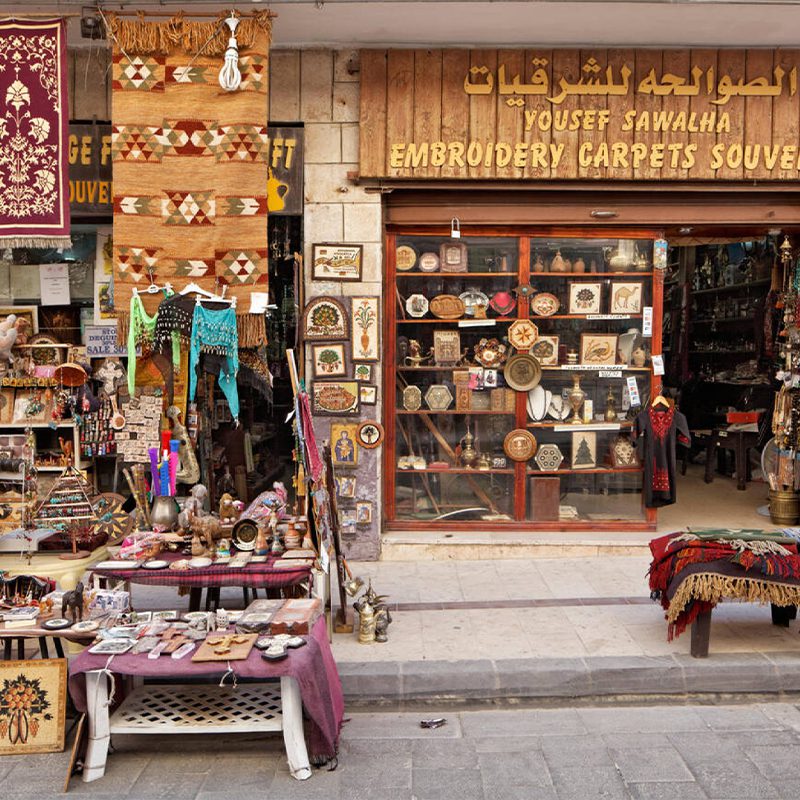
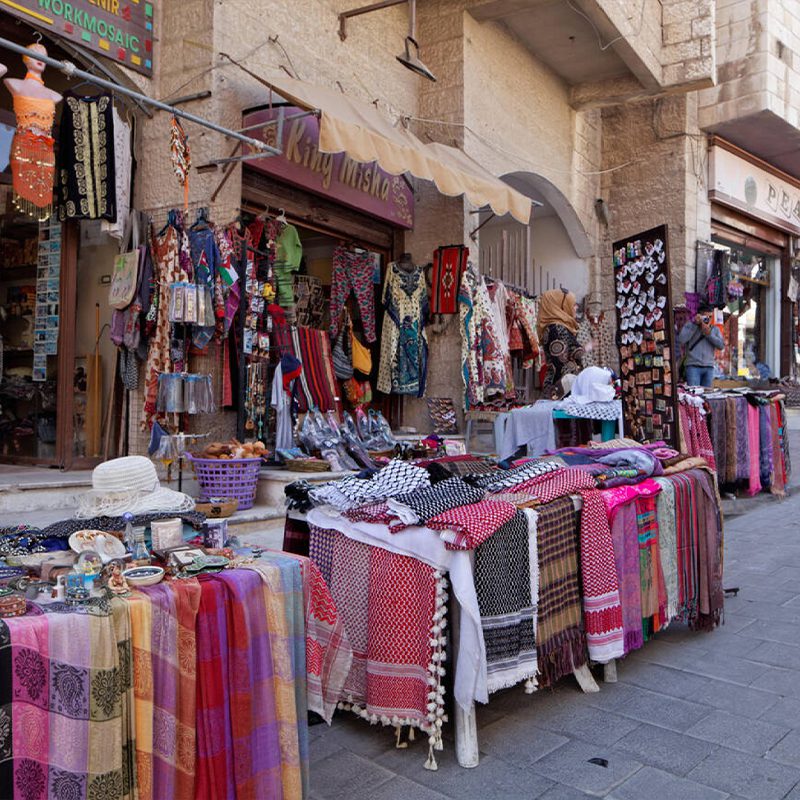
While visiting Madaba stop by Hussein bin Ali St or “The Tourist Street” to purchase handicrafts and products specific to the mosaics and religious iconography found in Madaba.
La storia museum
Stumble upon the recreation of Jordan’s biblical history at the La Storia Museum in Mount Nebo. Bring religious history to life with sculptures of ethnographic scenes designed to place you in the heart of biblical time.
With most of the city now in ruins, Umm ar-Rasas, originally inhabited by the Romans to protect trade routes from the Arabian Peninsula to the Levant, is now an archeological site perfect for those who love history. Listed on the UNESCO World Heritage list in 2004 because of its diverse Roman and Islamic influences, this site is sure to please.
Oyun Moses is an archaeological and religious area composed of hot springs. It is located 10 Km from Madaba near Mount Nebo, specifically towards the northern/eastern side of the mountain. This name refers the story of Moses when he struck “the rock” causing water to gush out; providing his community and their livestock with water.
Beit Al Bieruti is distinguished by its ancient architectural style, as it is a heritage house built back a hundred ago, and through the tourists experience in Beit Al Beiruti, they will enjoy unparalleled tourism experiences, as it is an arts and crafts store, in addition, It is full of interactive activities, including educational and entertainment activities.
Providing local Experiences as a part Ecotourism definition, as a ‘responsible travel that conserves the environment and improves the well-being of local people’.
Cultural and Heritage experiences benefit local communities and destinations culturally and economically and it is about uniting conservation, communities, and sustainable travel. This could be considered as the competitive advantage of Al Bieruti
Certified in training artists in the restoration of mosaics, the Madaba Institute for Mosaic Art offers a two-year diploma program for the vocational training of mosaic restoration.
Falling from the high cliffs the waterfalls of Zarq’a Ma’in are a sneak peek into heaven. Visitors to the Zarq’a Ma’in hot springs will be treated to landscapes similar to the tropical atmosphere of South American countries. Bring your trekking shoes and enjoy the hike.
Wadi Balou’ is one of Jordan’s hidden secrets. With black and white stones covering the Wadi’s bed and mix of sediment rock and limestone on the walls the trek is absolutely unique. Dropping into Mujib Dam, this canyon is a proper example of pure canyoning with 3 rappels , pools , slides and jumps.
Wadi Hidan is a black, narrow basalt canyon that feeds into the Dead Sea. The trek follows a ravine through natural pools and vegetation. Expect to get wet.