Every October, something quietly extraordinary happens across Jordan’s northern highlands. Families pour out of cities and villages to work olive groves that in some cases have been in continuous cultivation for centuries. Olive picking in Jordan is not a tourist attraction in the conventional sense — it is a living agricultural tradition that predates the Roman ruins at Jerash, and travelers who time their visit to coincide with the harvest season gain access to a side of Jordanian rural life that no temple, museum, or heritage site can replicate.
The olive harvest is, at its core, a communal event. Neighbors help neighbors. Extended families return from Amman for the season. Children who have never held a smartphone-free hour spend entire days in the groves. If you are planning an authentic cultural Jordan experience and want something that goes beyond the Petra-Wadi Rum circuit, the olive harvest is genuinely unmissable.
When Is Olive Harvest Season in Jordan and Why Timing Is Everything
The olive picking season in Jordan runs from mid-October through late November, with the precise window varying by region, altitude, and cultivar. The northern highlands — Ajloun, Jerash, and the Irbid governorate — tend to begin first, typically in the second or third week of October. The central regions around Amman and the Balqa governorate follow slightly later. By mid-November, the harvest in most areas is complete.
Timing your visit matters more than most travelers realize. Arrive too early and the olives are unripe — the groves are green and quiet. Arrive after the harvest concludes and you’ll find the trees stripped and the presses idle. The two-week window between late October and early November represents the peak of activity, when the combination of ripe fruit, full family participation, and active pressing mills makes the experience most vivid and immersive.
The olive varieties most commonly grown in Jordan’s northern highlands — primarily Rumi (one of the oldest documented cultivars in the Levant) and Nabali — are harvested by hand and with traditional raking tools. The Rumi olive in particular is notable for producing an oil of exceptional quality, with a robust, peppery finish that reflects the mineral-rich soil of the Ajloun highlands. Visiting Jordan’s olive oil producing regions during this period means witnessing a supply chain that runs from grove to press to bottle within hours.
Ajloun: The Heart of Jordan’s Olive Country
If the Jordan olive harvest has a spiritual center, it is Ajloun — a forested highland governorate in northern Jordan that feels entirely unlike the desert landscapes most travelers associate with the country. The hills here are green for much of the year, covered in oak, pine, and vast stretches of ancient olive grove. The air smells of thyme and woodsmoke in October.
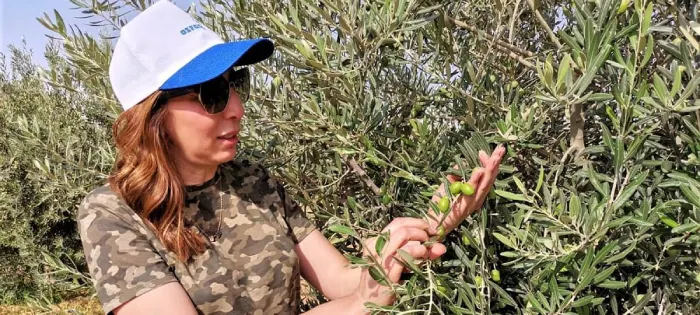
Ajloun’s olive groves are among the most densely planted in Jordan, and the region’s farming families have maintained traditional harvesting methods with remarkable continuity. The standard technique involves spreading large cloth nets beneath the trees, then raking the branches with wooden or plastic combs to release the olives, which fall into the nets below. It is physical, repetitive, satisfying work — and farming families almost universally welcome guests who want to participate genuinely rather than merely observe.
The Ajloun Forest Reserve, managed by the Royal Society for the Conservation of Nature, has developed several agritourism programs that connect travelers with local farming families during the harvest season. These are not performance experiences — you work, you eat with the family, and you leave with olive oil pressed that same day. For travelers exploring Jordan’s agritourism and rural heritage, these programs represent some of the most meaningful encounter opportunities in the country.
What to Expect During a Real Olive Picking Day in Jordan
A genuine olive harvest day begins early. Families typically start at sunrise to take advantage of the cool morning air before the October sun climbs. Breakfast in the grove — flatbread, labneh, za’atar, and olives from last year’s harvest — is often served directly on the spread nets, one of those unrepeatable travel meals that has nothing to do with a restaurant.
The work itself is meditative rather than grueling for a day participant. Experienced pickers move through a tree methodically, stripping each branch in long downward rakes while conversation flows continuously around them. By midday, a productive team will have filled several large sacks. The olives are then transported — sometimes by truck, sometimes by donkey on steeper terrain — to the local pressing mill (ma’sara), where the transformation from fruit to oil happens within twenty-four hours of picking to preserve maximum quality.
The pressing mill visit is, for many travelers, the single most memorable part of the experience. Modern cold-press mills operate with stainless steel centrifuges, but many family operations in Ajloun and Jerash still use stone mills for the first pressing. Watching dark green oil emerge from freshly crushed fruit, then tasting it still warm with bread, is an encounter with food at its most elemental.
Practical Guide: How to Join an Olive Harvest Experience in Jordan
- Best regions: Ajloun, Jerash, northern Irbid governorate — all within 1.5 hours of Amman
- Season window: Mid-October to late November; peak activity late October to early November
- How to book: Through RSCN’s Ajloun ecotourism programs, local guesthouses in Ajloun village, or a specialist Jordan cultural tour operator
- What to wear: Long sleeves and trousers (sun protection and branch scratches); sturdy closed shoes; layers for morning chill
- What to bring: Water, sun protection, a small bag for the olive oil you’ll inevitably purchase to take home
- Cost: Community harvest participation programs typically run $25–60 per person including meals; private family arrangements vary
- Language: Basic Arabic phrases are warmly received; most program coordinators speak English
The olive harvest is one of those rare travel experiences that costs almost nothing, requires no special equipment or fitness level, and delivers a cultural depth that expensive luxury tours rarely match. In a country already rich with ancient history and dramatic landscape, the simple act of picking olives from a thousand-year-old tree alongside a Jordanian farming family may well be the experience you describe first when you return home.