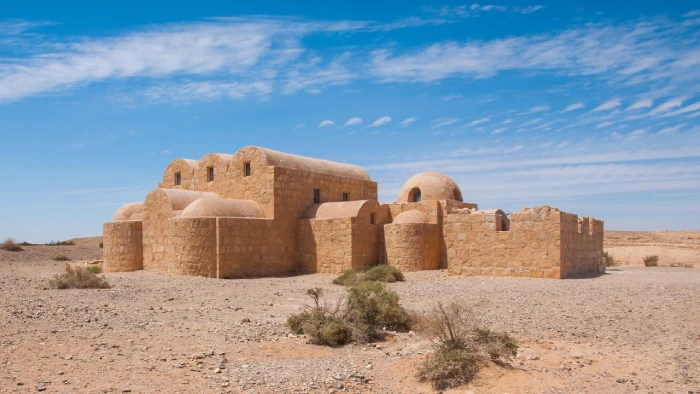
Qasr Amra (also spelled Quseir Amra) is one of the most unique historical attractions in Jordan. Located in the eastern desert, this UNESCO World Heritage Site is famous for its remarkably preserved frescoes, early Islamic art, and distinctive Umayyad architecture.
For travelers looking beyond Petra and Wadi Rum, Qasr Amra offers a different side of Jordan—one that blends history, culture, and artistic expression in a quiet desert setting.
What is Qasr Amra?
Qasr Amra is an 8th-century desert castle built during the Umayyad Caliphate. Unlike traditional fortresses, it served as a royal retreat and leisure complex. The structure includes a reception hall and a fully developed bathhouse (hammam), showcasing advanced engineering for its time.
Today, Qasr Amra is considered one of the best-preserved desert castles in Jordan and a key example of early Islamic architecture.
Why is Qasr Amra Famous?
Qasr Amra is globally recognized for its extraordinary frescoes that decorate the interior walls and ceilings. These paintings depict:
- Royal hunting scenes
- Musicians and dancers
- Daily life during the Umayyad period
- Mythological figures
- Astronomical and zodiac representations
The famous zodiac dome inside the bathhouse is one of the earliest known depictions of the night sky in Islamic art. These artworks are especially significant because they represent rare examples of secular themes in early Islamic culture.
Location of Qasr Amra
Qasr Amra is located about 85 km east of Amman, in the Jordanian desert within Zarqa Governorate. Its remote location makes it part of the famous Desert Castles of Jordan, a collection of Umayyad-era structures scattered across the region.
Architecture and Design
The design of Qasr Amra reflects both simplicity and innovation. The site includes:
- A rectangular audience hall
- A bath complex with hot, warm, and cold rooms
- A dome decorated with celestial imagery
- An early water management system
Despite its relatively small size, the building demonstrates sophisticated architectural planning and artistic detail.
UNESCO World Heritage Significance
Qasr Amra was designated a UNESCO World Heritage Site in 1985 due to its outstanding cultural value. It represents:
- A rare example of early Islamic art
- Insight into Umayyad royal lifestyle
- Exceptional preservation of frescoes
Its recognition highlights its importance not only in Jordan but also in global history.
Best Time to Visit Qasr Amra
The best time to visit Qasr Amra is during:
- Spring (March to May)
- Autumn (September to November)
During these seasons, the weather is mild, making it ideal for exploring the desert environment.
Travel Tips for Visiting Qasr Amra
- Combine your visit with other desert castles such as Qasr Kharana and Qasr Azraq
- Bring water, sunscreen, and comfortable clothing
- Visit early morning or late afternoon to avoid high temperatures
- Consider hiring a guide to understand the historical and artistic details
Why Visit Qasr Amra?
Qasr Amra offers a unique travel experience that goes beyond typical tourist attractions in Jordan. It provides a rare opportunity to explore early Islamic art, understand Umayyad culture, and witness one of the oldest fresco collections in the region.
Whether you are interested in history, architecture, or cultural tourism, Qasr Amra is a must-visit destination in Jordan.