Located in the vast eastern desert near Amman, Qasr Al Hallabat stands as one of the most fascinating and historically layered desert castles Jordan has to offer. Far from the crowds of mainstream attractions, this remarkable site provides an authentic window into early Islamic history Jordan and the evolution of Umayyad architecture.
For travelers seeking meaningful experiences beyond the typical tourist trail, Qasr Al Hallabat Jordan represents the essence of Jordan off the beaten path, where history, culture, and tranquility meet in a unique desert setting.
The Origins and Historical Evolution of Qasr Al Hallabat
The story of The Qasr begins long before the Islamic era. Originally constructed as a Roman fortress, the site played a strategic role in protecting trade routes that connected the Arabian Peninsula with the Levant. Its military purpose is still visible today through its fortified layout and defensive design.
During the Umayyad period in the 8th century, the structure was transformed into a luxurious desert residence. This transition marked a shift from military use to a multifunctional complex that included residential quarters, administrative spaces, and areas for relaxation.
This dual identity makes Qasr Al Hallabat Jordan one of the most intriguing historical landmarks Jordan, reflecting both Roman discipline and the artistic sophistication of Islamic art and mosaics.
Architectural Brilliance and Unique Features
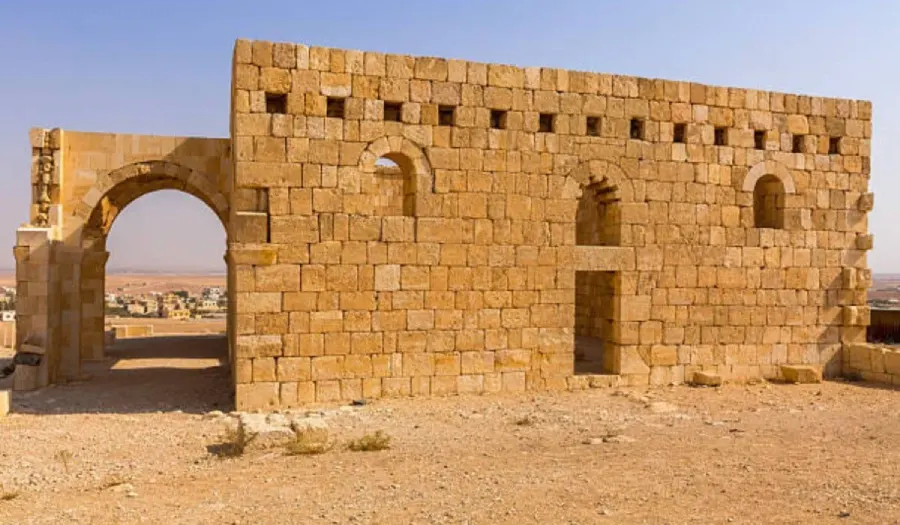
One of the most captivating aspects of Qasr Al Hallabat is its architectural diversity. Built using a combination of black basalt and white limestone, the structure creates a striking visual contrast that defines Umayyad architecture in desert environments.
The complex includes:
- A central courtyard surrounded by rooms
- Reception halls used for gatherings
- A small mosque indicating religious importance
- Agricultural installations that supported self-sufficiency
These elements demonstrate how a desert fortress Jordan could function as more than just a defensive structure—it was a hub of life, governance, and culture.
Nearby, visitors can also explore additional ruins that complement the main site, offering a broader understanding of archaeological sites Jordan and their role in regional history.
The Cultural and Historical Importance of the Site
Visiting Qasr Al Hallabat is not just about seeing ancient walls; it is about understanding the transformation of Jordan through different civilizations. The site reflects how cultures merged and evolved over time, creating a rich tapestry of history.
While many travelers prioritize destinations like Petra and Wadi Rum, exploring lesser-known places like Qasr Al Hallabat Jordan provides deeper insight into cultural tourism Jordan.
This makes it particularly appealing for history enthusiasts, photographers, and travelers interested in ancient ruins near Amman.
How to Visit this Qasr from Amman
Reaching Qasr Al Hallabat is straightforward, especially for those staying in Amman. The site is located approximately 60 kilometers east of the city and can be reached in about one hour by car.
It is one of the best Amman day trips, often included in itineraries that cover multiple desert castles in a single journey.
Travelers can visit independently or as part of organized Jordan cultural tours, which provide historical context and guided exploration.
Best Time to Visit and Travel Experience
The best time to explore Qasr Al Hallabat Jordan is during spring and autumn when temperatures are moderate and suitable for outdoor exploration. However, the site can be visited year-round thanks to Jordan’s generally dry climate.
Early morning or late afternoon visits are highly recommended, as they offer better lighting conditions and a more comfortable experience. These times also enhance the visual beauty of the site, especially for photography enthusiasts interested in historical landmarks Jordan.
What to Expect During Your Visit
A visit to Qasr Al Hallabat is both peaceful and enriching. Unlike crowded tourist attractions, the site allows visitors to explore freely and connect with the surroundings.
You can walk through ancient corridors, observe architectural details, and imagine life during the Umayyad era. The quiet desert environment enhances the experience, making it ideal for those seeking reflective and immersive travel moments.
This makes it a top choice for travelers looking for Jordan heritage sites that offer both history and serenity.
Practical Travel Tips
To make the most of your visit to Qasr Al Hallabat Jordan, consider the following:
- Wear comfortable walking shoes
- Bring water, especially during warmer months
- Plan your visit as part of a wider desert castle itinerary
- Allocate enough time to explore the site fully
Combining this destination with nearby attractions can enrich your overall journey and provide a more complete understanding of things to do near Amman.
FAQ
What is Qasr Al Hallabat?
It is a historic desert castle in Jordan with Roman origins and Umayyad transformations.
Where is Qasr Al Hallabat located?
It is located near Amman in eastern Jordan.
Why is it important?
It represents a blend of Roman and Islamic history, making it a key historical landmark Jordan.
How long should I spend there?
Typically, 1–2 hours is enough to explore the site thoroughly.
Is it suitable for all travelers?
Yes, it is accessible and suitable for most visitors interested in history and culture.
Final Insight: A Hidden Gem Worth Discovering
Exploring Qasr Al Hallabat is an experience that goes beyond traditional sightseeing. It offers a deeper connection to Jordan’s past, revealing stories of empires, cultures, and architectural evolution.
For travelers looking to enrich their journey with meaningful discoveries, Qasr Al Hallabat Jordan is a destination that truly stands out—quiet, authentic, and full of history waiting to be uncovered