The Petra Main Trail is the most popular and frequently visited hiking route in Petra, Jordan. Covering approximately 4 km, the trail takes visitors through the heart of the ancient Nabataean city and passes some of Petra’s most famous archaeological monuments.
Starting at the Petra Visitor Center, the route leads through the spectacular Siq before opening onto the Treasury. From there, visitors continue through the ancient city to see the Royal Tombs, Colonnaded Street, and Qasr Al-Bint, also known as the Palace of the Daughter.
The Main Trail is an excellent introduction to Petra and allows visitors to experience many of the site’s most important attractions along one route.
Petra Main Trail Route
The Main Trail begins at the Petra Visitor Center, located near the entrance to the archaeological site. From the Visitor Center, visitors walk toward the entrance of the Siq and begin the journey into the ancient city.
The main route includes several major landmarks:
- Petra Visitor Center
- The Siq
- The Treasury
- Street of Facades
- Petra Theatre
- Royal Tombs
- Colonnaded Street
- Qasr Al-Bint
Each section offers a different view of Petra’s history, architecture, and natural landscape.
The Siq
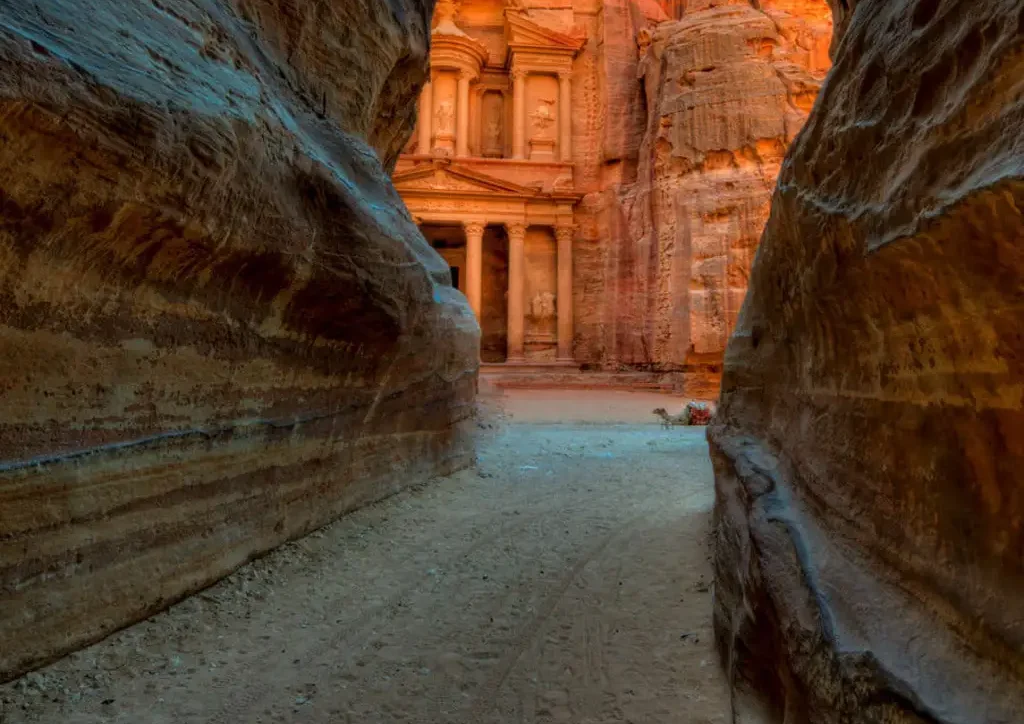
The first major section of the trail is the Siq, a dramatic narrow gorge surrounded by towering sandstone cliffs.
The Siq stretches for approximately 1.2 km and forms the natural entrance to the ancient city. As you walk through the gorge, you can see rock formations, ancient carvings, channels, and other remains that reflect how the Nabataeans used and developed the area.
The changing colors and shapes of the sandstone cliffs make the Siq one of the most memorable parts of the Petra experience.
The Treasury
At the end of the Siq, the narrow passage suddenly opens to reveal Al-Khazneh, the Treasury.
The Treasury is one of Petra’s most recognizable monuments and is carved directly into the sandstone cliff. Its impressive façade is a highlight of the Main Trail and is often the first major monument visitors encounter inside the ancient city.
Although it is commonly called the Treasury, its original purpose remains a subject of archaeological discussion, and it is generally associated with a monumental tomb.
Visitors can stop here to take photographs and appreciate the detailed carvings before continuing deeper into Petra.
Street of Facades
After the Treasury, the Main Trail continues through the area known as the Street of Facades.
This section contains a series of large rock-cut façades carved into the cliffs. The structures demonstrate the scale of Petra’s ancient architecture and provide an impressive transition between the Treasury and the central part of the city.
Petra Theatre
Further along the route, visitors reach the Petra Theatre, a large amphitheater carved directly into the sandstone.
The theatre could accommodate a large audience and is an important example of Petra’s rock-cut architecture. Its location within the ancient city provides an opportunity to see how the Nabataeans incorporated monumental structures into the natural landscape.
The Royal Tombs
The Main Trail then continues toward the Royal Tombs, an impressive group of monumental tombs carved into the mountainside.
Among the most recognizable are the:
- Urn Tomb
- Silk Tomb
- Corinthian Tomb
- Palace Tomb
The colorful sandstone and enormous façades make the Royal Tombs one of the most visually impressive sections of the Main Trail.
Visitors can stop to explore the area and appreciate the different architectural styles and natural patterns in the rock.
The Colonnaded Street
Continuing through the ancient city, the trail reaches the Colonnaded Street, one of the main thoroughfares of ancient Petra.
The remains of columns and other structures provide an idea of how the city was organized and developed. The street once formed an important commercial and civic area and connected different parts of the ancient city.
Walking along the Colonnaded Street also provides views of the surrounding mountains and several important archaeological remains.
Qasr Al-Bint
The Main Trail eventually reaches Qasr Al-Bint, one of the major temples in Petra and an important landmark near the end of the main route.
The monument is also known as the Palace of the Daughter and is located close to the Colonnaded Street.
Nearby, visitors can find places to stop and rest before continuing their exploration of Petra or choosing one of the additional hiking routes leading toward areas such as Ad Deir (the Monastery).
How Long Is the Petra Main Trail?
The Main Trail is approximately 4 km in length, although the total walking distance for a visitor can be longer depending on additional viewpoints, monuments, and side trails explored along the way.
The time required to complete the route depends on your walking speed and how much time you spend visiting the archaeological sites.
Visitors who want to properly explore the monuments, take photographs, and enjoy the scenery should allow several hours rather than rushing through the trail.
Is the Petra Main Trail Difficult?
The Main Trail is generally more accessible than some of Petra’s more demanding hiking routes, such as the trails leading to the High Place of Sacrifice or the Monastery.
However, visitors should still expect a considerable amount of walking over uneven surfaces. Comfortable walking shoes are recommended, and carrying drinking water is important, especially during warmer months.
The route also includes sections where the ground can be uneven or rocky, so visitors should walk carefully.
Best Time to Walk the Petra Main Trail
Starting early in the morning is generally a good option for visitors who want to explore the Main Trail in more comfortable conditions.
An early start also gives you more time to visit the major monuments and continue to additional trails if you have enough energy and time.
During warmer periods, temperatures can become uncomfortable later in the day, so carrying water, wearing appropriate clothing, and using sun protection are important.
What to See Along the Main Trail
The Petra Main Trail allows visitors to experience many of the ancient city’s most important attractions in one journey, including:
- The Siq
- The Treasury
- Street of Facades
- Petra Theatre
- Royal Tombs
- Colonnaded Street
- Qasr Al-Bint
For first-time visitors, this route provides a comprehensive introduction to Petra’s archaeological landscape and history.
Tips for Walking the Petra Main Trail
To make the most of your visit:
- Start early in the day.
- Wear comfortable walking shoes.
- Carry sufficient drinking water.
- Use sun protection.
- Allow several hours to explore the major monuments.
- Take regular breaks, especially during warmer weather.
- Follow the marked route and local site regulations.
- Consider adding one of Petra’s additional hiking trails if you have enough time and energy.
Petra Main Trail: A Complete Introduction to the Ancient City
The Petra Main Trail is the essential route for experiencing the heart of the ancient city. From the dramatic entrance through the Siq to the iconic Treasury and the impressive Royal Tombs, Colonnaded Street, and Qasr Al-Bint, the trail brings together many of Petra’s most significant attractions.
At approximately 4 km, the Main Trail provides a practical way to explore Petra’s central archaeological area while leaving visitors with the option of continuing onto additional hiking routes for a deeper exploration of the ancient city and its surrounding mountains.