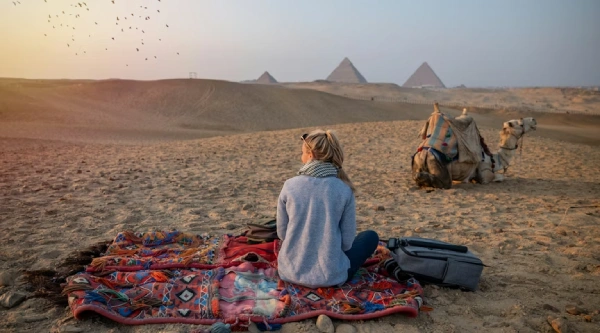
Knowing how to plan a trip to Egypt is genuinely different from planning almost any other journey. The country doesn’t just offer sights it offers the accumulated weight of five thousand years of continuous civilization, and that scale demands a different kind of traveler preparation. Book wrong, arrive in the wrong month, or skip the right context, and you’ll leave feeling vaguely cheated. Plan correctly, and Egypt will be the most overwhelming, beautiful, and unforgettable trip of your life.
Egypt is one of those rare destinations where the gap between the tourist experience and the real experience remains enormous. The Giza Plateau on a blazing August afternoon, surrounded by selfie sticks and aggressive camel touts, looks nothing like the same plateau at sunrise in late October, when the desert air is cool and the only sound is wind. That gap and how to exploit it is exactly what this guide is built around.
Unlike Western Europe, where last-minute travel is perfectly workable, Egypt travel planning benefits enormously from forward thinking. Nile cruises book out weeks in advance during peak season. The Valley of the Kings limits daily tickets to specific tombs. Certain lesser-known sites in Luxor require pre-arranged permits. If you want to build an Egypt itinerary that goes beyond the standard circuit , you need to plan smarter not just earlier.
Insider Insight: Most first-timers make the mistake of treating Cairo, Luxor, and Aswan as a single, interchangeable “Egypt experience.” In reality, each of these cities is culturally, climatically, and logistically distinct. Cairo is a living megalopolis of 22 million people. Luxor is an open-air archaeological museum. Aswan is a slow, sun-drenched river town. Understanding the character of each before you arrive changes everything about how you move between them.
The Best Time to Visit Egypt Without the Crowds or the Sweltering Heat
One of the most searched questions in Egypt travel research is deceptively simple: when should I go? The honest answer depends entirely on where you’re going and what you prioritize — but there is a clear consensus among experienced travelers and Egypt tourism specialists alike.
Egypt is a hot, arid country with a largely consistent climate, but “consistent” doesn’t mean “identical year-round.” The Nile Valley experiences genuine seasonal variation, and the difference between visiting in July versus November is the difference between miserable and magical.
- October – November :- Best Overall Temperatures drop to 25–32°C in Upper Egypt. Crowds are building but not at peak. Ideal for both Cairo and Luxor. Best compromise of weather, price, and access.
- March – April :- Best for Budget Spring shoulder season brings pleasant temperatures and relatively lighter crowds before the Easter rush. Nile cruise prices are often lower. Sandstorms (khamsin) are possible in April.
- December – February :- Peak Season The most popular period. Cairo and Luxor temperatures are perfectly comfortable (15–22°C), but tour groups are at maximum density and Nile cruise berths fill fast. Book 3+ months ahead.
- June – August :- Avoid for Interiors Upper Egypt (Luxor, Aswan) hits 42–46°C. Only suitable for Red Sea beach destinations like Hurghada or Sharm el-Sheikh. Significantly cheaper, but physically punishing for sightseeing.
Ramadan Travel in Egypt: What You Need to Know
Ramadan a moveable feast whose timing shifts each year deserves special attention in any Egypt travel plan. During the holy month, restaurants close during daylight hours, alcohol is restricted in many establishments, and the pace of daily life slows considerably. However, nights during Ramadan are extraordinarily vibrant. Markets stay open late, music fills the streets, and the iftar meal at sunset is one of the most communal, generous experiences Egypt offers. If your schedule allows flexibility, visiting during the final ten days of Ramadan and staying through Eid al-Fitr offers a cultural immersion that no standard tour itinerary provides.
Egypt Visa Requirements & Entry Rules First-Timers Miss in 2026
Egypt has significantly streamlined its visa process in recent years, and for most Western, Gulf, and many Asian nationalities, entry is straightforward. The majority of travelers including citizens of the US, UK, EU, Canada, and Australia can obtain an Egypt e-Visa online through the official government portal before departure. The visa costs $25 USD, is single or multiple entry, and is typically processed within 24–72 hours. This is strongly recommended over the visa-on-arrival option, which exists but regularly involves long queues at Cairo International Airport.
- Apply for your e-Visa at https://flowtraveljo.com/tailor-made/ at least one week before travel
- Your passport must be valid for at least 6 months beyond your entry date
- Citizens of certain nationalities (including most Arab states) receive free visas on arrival
- Israeli passport holders: entry is permitted but some neighboring border crossings have specific rules verify before travel
- Yellow fever vaccination certificate required if arriving from a country with active YF transmission
- No COVID-related entry requirements remain in effect as of 2026
- Keep a printed or digital copy of your visa approval accessible at immigration
One entry nuance that catches travelers unaware: if you plan to enter Egypt from the Sinai Peninsula side (e.g., arriving via the Taba border crossing from Israel or Jordan) and intend to travel beyond the Sinai, you need a full Egyptian visa, not the limited Sinai-only stamp that border agents sometimes offer. This Sinai-only entry restricts you to the Sinai Peninsula and does not permit travel to Cairo, Luxor, or Aswan.

The Smarter 10-Day Egypt Itinerary That Skips the Tourist Conveyor Belt
Most standard Egypt itineraries follow an almost identical script: fly into Cairo, see the Pyramids, take an overnight train to Luxor, board a Nile cruise to Aswan, fly back. It’s a solid circuit and it’s solid for good reason. But the itinerary below is built to retain those pillars while inserting the moments, detours, and pacing decisions that separate a transformative trip from a box-ticking tour.
Day 1 — Cairo: Islamic Quarter & the Khan el-Khalili Bazaar at Night Arrive, settle in, and resist the urge to go straight to Giza. Spend your first evening walking Al-Muizz Street in the medieval Islamic quarter instead the architecture, the noise, and the sensory overload will recalibrate your expectations for everything that follows. The bazaar at night is a different world from the daytime tourist rush.
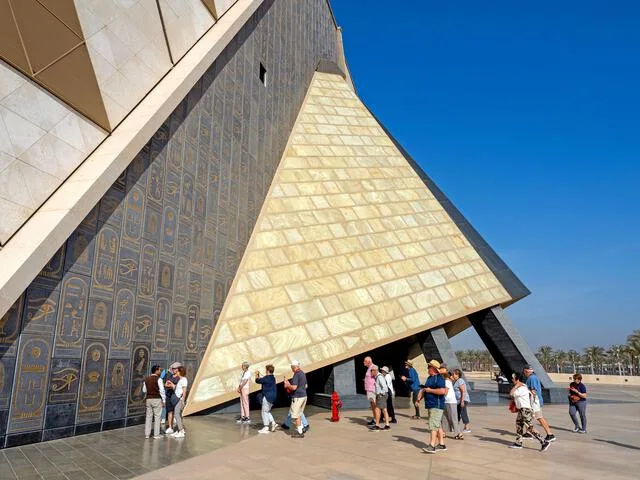
Days 2–3 — Giza Plateau & the Grand Egyptian Museum Dedicate a full morning to Giza, arriving before 8am. Afternoon: the Grand Egyptian Museum, which now houses the complete Tutankhamun collection. Don’t rush this museum alone warrants 4–5 hours. Day 3 adds Saqqara and the Dahshur pyramids, which almost no day-tour itinerary includes but which are archaeologically richer than Giza in many respects.
Days 4–5 — Luxor: The East and West Banks Done Properly Fly from Cairo to Luxor (55 minutes take the flight, not the overnight train). East Bank morning: Karnak at sunrise before the tour groups arrive. Afternoon: cross to the West Bank and hire a private driver rather than joining a group tour. The Valley of the Kings requires at least half a day; include the tomb of Seti I if your budget allows the premium ticket.
Days 6–8 — Nile Cruise South to Aswan: Edfu, Kom Ombo & the Temple of Philae Board a Nile cruise for the three-night southward journey to Aswan. The stops at Edfu (the best-preserved temple in Egypt, largely unknown to casual visitors) and Kom Ombo (a double temple built for two gods simultaneously) are the highlights most travelers report as the most unexpectedly moving. End in Aswan, where the pace drops entirely.
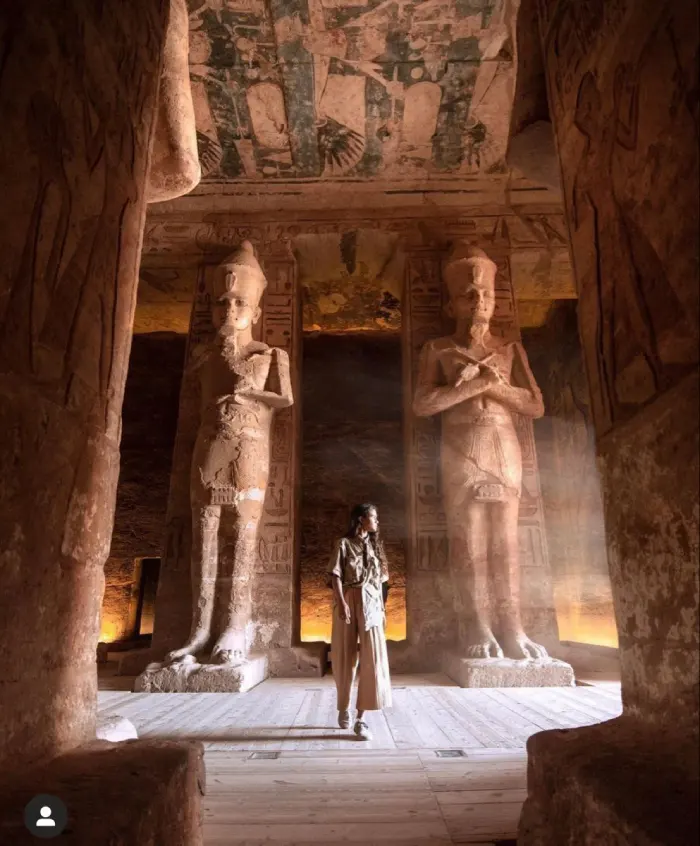
Days 9–10 — Aswan & Abu Simbel: The Grand Finale Aswan deserves a full rest day take a felucca around Elephantine Island, visit the Nubian villages on the west bank, eat grilled fish by the Nile. On day 10, take the early morning convoy to Abu Simbel, which requires specific transport planning the temples of Ramesses II are the single most jaw-dropping site in Egypt and should not be missed if you’re this far south.
Is Egypt Safe to Travel? What the Data and Locals Actually Say
Safety is the question that generates the most anxiety in Egypt travel planning, and it deserves a direct, honest answer rather than either blanket reassurance or excessive alarm. Egypt is, for the vast majority of tourists visiting the main archaeological and resort destinations, a safe country to travel. The Egyptian government has made significant investments in tourist security since 2016, and the Luxor-to-Aswan corridor, Cairo’s tourist districts, and Red Sea resorts all maintain a strong security presence.
The more realistic safety concerns in Egypt are not terrorism-related but rather the everyday challenges of navigating a complex, high-pressure tourist environment: aggressive touts at major sites, scams targeting first-time visitors (the “papyrus shop detour,” the “cousin’s perfume store,” the “free tea, now buy a carpet” sequences are all well-documented), and road safety issues on rural highways. These are manageable with awareness, not fear.
Safety Nuance: The Sinai Peninsula (outside of the beach resorts of Sharm el-Sheikh and Dahab) and the Western Desert beyond established tourist routes carry elevated risk advisories from multiple Western governments as of 2026. These are genuine advisories worth heeding. The main archaeological circuit Cairo, Luxor, Aswan, the Red Sea coast does not share these concerns and carries standard tourist-destination risk levels comparable to Morocco or Jordan.
Solo female travelers in Egypt face specific considerations worth addressing directly. Egypt is not the easiest destination for women traveling alone, and harassment in busy urban areas is a documented reality. That said, many thousands of women travel Egypt solo each year successfully, and strategies like understanding local dress code expectations and cultural norms significantly reduce unwanted attention and open doors to genuine hospitality.
Getting Around Egypt: Trains, Domestic Flights & Nile Cruises Compared
Egypt’s internal transport landscape has several excellent options and a few that look appealing on paper but disappoint in practice.
Domestic Flights (Cairo–Luxor, Cairo–Aswan, Luxor–Abu Simbel): EgyptAir operates the primary routes and, when booked in advance, offers competitive fares. The Cairo–Luxor flight takes under an hour versus 10+ hours by train, and for most travelers the time saving justifies the premium. Book directly on the EgyptAir website or via a local agent third-party booking sites often add unnecessary fees.
Egyptian National Railways (Sleeper Train): The famous Cairo–Luxor sleeper train has a near-mythic reputation in backpacker circles, and it remains a legitimate, affordable option but approach it with realistic expectations. The Abela Egypt sleeper service (the only one officially available to foreigners) is functional rather than luxurious. Delays are common. That said, waking up as the train pulls into Luxor with the East Bank temples visible through the window is a legitimately romantic experience.
Nile Cruise: Between Luxor and Aswan, a Nile cruise is not just a transport option it is the experience. The standard floating hotel cruises operate on a fixed route with set stops, while the more upscale dahabiya sailing boats offer smaller-group, slower-paced journeys with greater flexibility. Budget three nights minimum for the southbound journey to do it properly.
Abu Simbel Transport: Abu Simbel lies 280km south of Aswan near the Sudanese border and cannot be reached by public transport. Your options are: a 3.5-hour road convoy that departs Aswan at 3am (cheap but exhausting), a 45-minute domestic flight from Aswan (significantly more expensive but transforms the trip into a manageable day excursion), or staying overnight in Abu Simbel itself, which allows you to experience the Sound & Light Show and see the temples at dawn a genuinely extraordinary experience.
Cultural Etiquette & Dress Code Tips That Open Doors in Egypt
Egypt is a predominantly Muslim country with deep cultural traditions around modesty, hospitality, and social formality and travelers who invest a small amount of effort in understanding these traditions are consistently rewarded with warmer, more genuine interactions and significantly less hassle at tourist sites.
Dress modestly, particularly outside of Red Sea resort areas. For women, loose clothing that covers shoulders and knees is appropriate in cities, markets, and all religious sites. For men, shorts are generally acceptable in tourist areas but draw attention in local neighborhoods and are prohibited inside mosques. Both sexes should carry a lightweight scarf for entering mosques, churches, and some temples a small piece of fabric that communicates enormous respect.
- Remove shoes before entering mosques and do so graciously, not grudgingly
- Accept tea when offered in a shop refusing is impolite; accepting creates no obligation to buy
- Greet people with As-salamu alaykum the response will be genuine warmth
- Negotiate prices in markets, but do so with good humor, never aggression
- Ask permission before photographing local people, especially in rural areas
- During Ramadan, avoid eating, drinking, or smoking in public during daylight hours
- Friday is the holy day major government sites and some banks are closed
The Egyptian concept of hospitality kerem runs extraordinarily deep, and travelers who engage with it genuinely (rather than treating every interaction as a potential scam) find that Egypt opens up in ways that no tour package can replicate. The family who invites you for tea in their home near the Nubian village, the retired archaeologist at a Luxor café who spent thirty years excavating the West Bank these encounters only happen to travelers who slow down and engage.

Egypt Packing List: What to Bring for Every Season
Egypt’s climate varies significantly across regions and seasons, but a few packing essentials hold true year-round. The desert sun is intense even in winter, the dust at archaeological sites is pervasive, and the contrast between outdoor heat and heavily air-conditioned interiors can require rapid wardrobe changes throughout a single day.
- Sun protection: SPF 50+ sunscreen, UV-protection sunglasses, and a wide-brimmed hat are non-negotiable from March through October
- Lightweight, long clothing: Linen or moisture-wicking fabrics in neutral colors that cover arms and legs practical for both heat management and cultural appropriateness
- Sturdy walking shoes: Archaeological sites involve uneven ancient paving, sand, and significant distances sandals are insufficient for a full day at Karnak or the Valley of the Kings
- A packable warm layer: Even summer desert nights can drop to 15°C; winter nights in Upper Egypt to below 10°C
- Cash in USD or EUR: ATMs are reliable in cities but unreliable at tourist sites; carry small USD notes for emergencies and tipping
- Filtered water bottle: Tap water is not potable anywhere in Egypt; a quality filter bottle reduces plastic waste and costs significantly
- Stomach medication & hand sanitizer: Street food in Egypt is delicious but digestive adjustment is common in the first few days
Expert Answers to the Questions Egypt Travelers Ask Most
How Many Days Do You Really Need in Egypt?
Ten days is the practical minimum for a trip that covers Cairo, Luxor, a Nile cruise, and Aswan with any depth. Seven days is possible but requires daily flights and sacrifices the Nile cruise. Two weeks allows you to add the Sinai Peninsula (St. Catherine’s Monastery, snorkeling at Dahab), the White Desert, or the oasis route through Bahariya and Siwa experiences that reveal an Egypt entirely separate from the Pharaonic circuit.
Is Egypt Suitable for First-Time Solo Travelers?
Egypt is absolutely manageable for experienced solo travelers who have traveled independently in countries like Morocco, Turkey, or India. For those whose previous independent travel experience is limited to Europe or Southeast Asia, the intensity of Egypt’s tourist hustle can be genuinely overwhelming in the first 48 hours. Booking the first two nights with a reputable local guide service gives you a foundation of orientation and confidence before going independent.
What Egyptian Foods Are Essential to Try?
Egypt has one of the most underrated food cultures in the Arab world. Kushari (a layered street dish of rice, lentils, pasta, and tomato sauce) is the national comfort food and costs under $1. Ful medames (slow-cooked fava beans with olive oil and cumin) is the breakfast of choice across the country. Fresh-grilled Nile perch in Aswan, feteer meshaltet (a flaky multilayered bread) from a Cairo street stall, and sugarcane juice pressed fresh at roadside stalls are all experiences that define Egyptian travel as much as any temple.