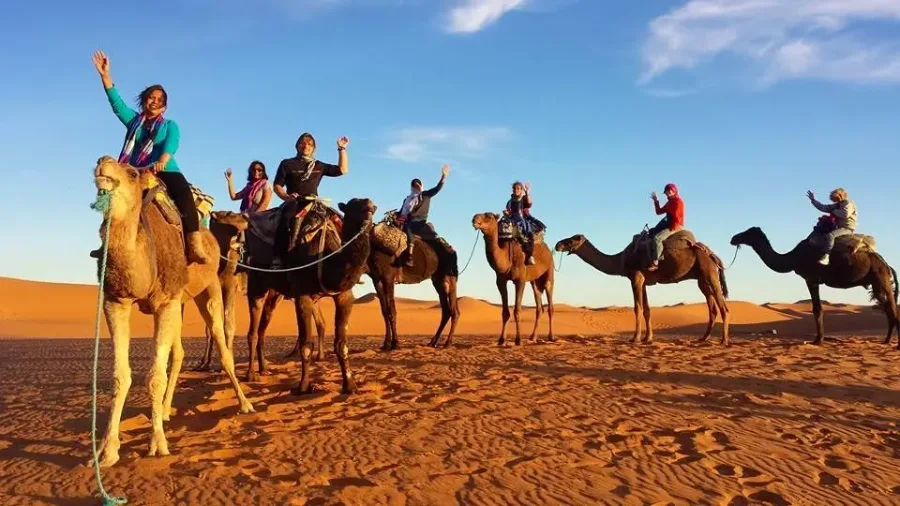
Camel trekking Sahara Morocco is one of those travel experiences that feels cinematic before you even arrive. The image is simple: golden dunes, a slow caravan, and silence stretching across the horizon. But once you step into the Moroccan desert—especially near Merzouga or the vast Erg Chebbi—you quickly realize this journey is far more layered than the photos suggest.
This guide goes beyond the basics. It breaks down what actually happens on a camel trek, how to choose the right route, and the insider decisions that shape your entire desert experience.
Best Camel Trekking Routes in Sahara Morocco: Merzouga vs Zagora Desert
Not all camel trekking experiences in Morocco are equal. The two main desert regions—Merzouga and Zagora—offer completely different landscapes and expectations.
Merzouga, located near the Algerian border, is home to Erg Chebbi, where dunes rise dramatically and create the iconic Sahara scenery most travelers imagine. Trekking here feels immersive, with deep desert camps and uninterrupted views.
Zagora, closer to Marrakech, offers a more accessible option but with flatter, rockier terrain. While still beautiful, it lacks the towering dunes that define the Sahara experience.
The key insight? If your priority is authenticity and dramatic landscapes, Merzouga is worth the longer journey. Many travelers explore best Sahara desert tours from Marrakech to compare these routes before committing.
What Happens During Camel Trekking Sahara Morocco (Step-by-Step Reality)
Camel trekking is not just a ride—it’s a transition into a different pace of life.
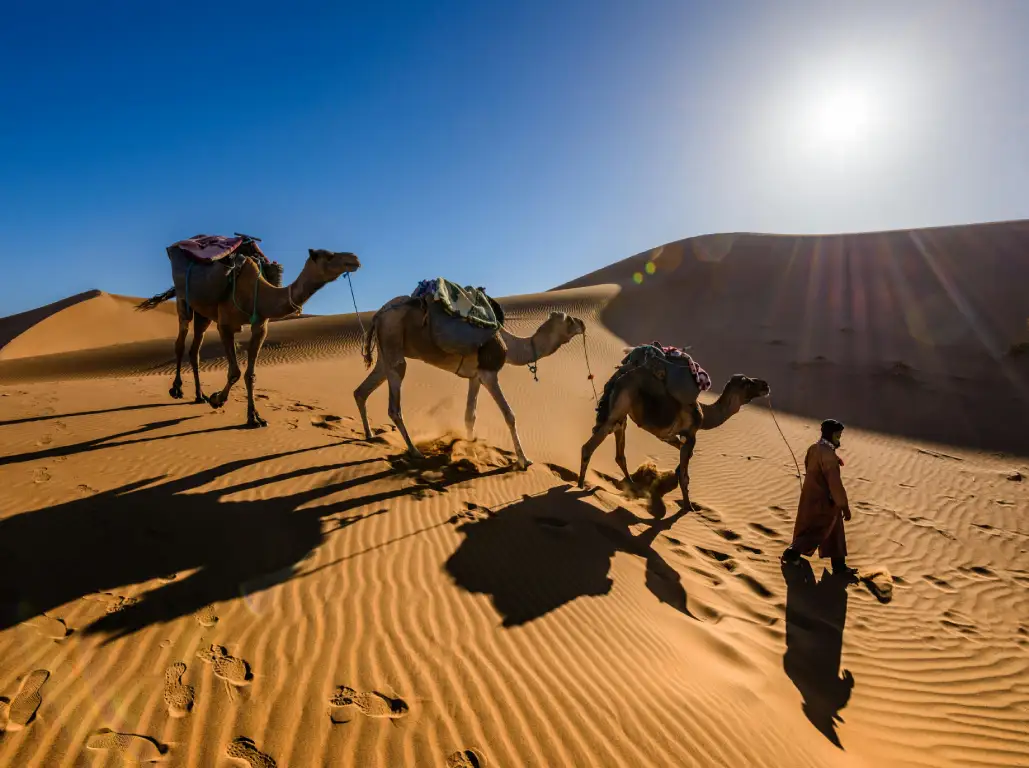
The journey typically begins in the late afternoon. As the sun softens, you mount your camel and move slowly into the dunes. The rhythm is steady, almost meditative, as the landscape shifts from warm gold to deep orange.
Reaching camp is only part of the experience. Evenings are spent under open skies, often with traditional music, local food, and storytelling. The silence of the desert at night is one of the most memorable aspects—something no itinerary can fully describe.
By morning, the desert transforms again. Sunrise over the dunes reveals a completely different palette, making early wake-ups not just worthwhile, but essential.
Camel Trekking Sahara Morocco Cost Breakdown: Budget vs Luxury Camps
Pricing for camel trekking in Morocco varies widely, but understanding what you’re paying for changes how you evaluate value.
Budget tours often include shared camps, basic bedding, and simple meals. These are ideal for travelers prioritizing cost over comfort.
Luxury experiences, however, redefine desert travel. Think private tents, proper beds, en-suite bathrooms, and curated dining under the stars.
Here’s a quick breakdown of what affects pricing:
- Distance into the desert (deeper = more exclusive)
- Camp quality (standard vs luxury)
- Group size (shared vs private)
- Transport from cities like Marrakech or Fes
Travelers often compare options through Morocco desert tour packages prices to understand what level of comfort fits their budget.
Best Time for Camel Trekking Sahara Morocco Based on Weather Conditions
Timing your camel trek is critical. The Sahara’s climate is extreme, and choosing the wrong season can significantly impact your experience.
The ideal months are October to April, when temperatures are manageable during the day and cooler at night. Spring and autumn offer the best balance.
Summer, especially from June to August, brings intense heat that can make trekking uncomfortable and even risky. Winter, while pleasant during the day, can be surprisingly cold at night.
The insight here is not just about avoiding heat—it’s about maximizing comfort during both the trek and overnight stay.
What to Pack for Sahara Camel Trekking: Practical Essentials Travelers Forget
Packing for the desert is less about quantity and more about strategy. The environment is dry, sunny, and constantly shifting between warm days and cool nights.
Key essentials include:
- Lightweight, breathable clothing
- A scarf or turban for sun and sand protection
- Comfortable shoes for walking on sand
- Power bank (electricity is limited in camps)
Many travelers underestimate the importance of preparation, which is why reviewing what to pack for Sahara desert trip before departure can prevent common mistakes.
Cultural Experience During Camel Trekking Morocco: Beyond the Ride
Camel trekking is not just a landscape experience—it’s a cultural one.
Most desert camps are run by local Berber communities, offering insight into traditions that have existed for generations. Music, food, and hospitality are integral parts of the experience.
Meals often include tagine, freshly baked bread, and mint tea, all prepared in remote conditions. These moments create a connection to Morocco that goes beyond sightseeing.
Unlike city travel, the desert strips away distractions. What remains is a slower, more intentional form of travel.
Is Camel Trekking in Morocco Worth It? The Honest Perspective
For many travelers, camel trekking Sahara Morocco becomes the highlight of their trip—but it’s not for everyone.
The ride itself can be physically demanding, especially for those not used to sitting on a camel for extended periods. Comfort is not the primary goal; experience is.
However, what you gain is something rare: silence, scale, and a sense of disconnection from modern life.
If you’re seeking luxury alone, you may find parts of the journey challenging. But if you’re open to the experience, the reward is unforgettable.
Final Insight: How to Choose the Right Sahara Experience
The difference between an average and exceptional camel trekking experience comes down to decision-making.
Choosing the right desert (Merzouga vs Zagora), the right camp level, and the right season will define your trip more than the trek itself.
Camel trekking Sahara Morocco is not just an activity—it’s a carefully layered experience that combines landscape, culture, and personal perspective.
Approach it with intention, and it becomes more than a highlight—it becomes a story you carry long after you leave the desert.